

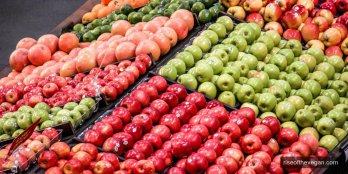
Photo: Timothy A. Gonsalves via Wikimedia Commons, CC BY-SA 4.0, cropped. This adapted image is also licensed CC BY-SA 4.0.
Nature Study: Shift to Plant-Based Diets Needed to Keep the Food System Within Planetary Limits
Flexitarian diets alone could more than halve food-system emissions
A shift to healthier, more plant-based diets is needed to keep the world's food system within safe environmental limits, a major study in Nature has found. Without action, the food system's environmental impacts could rise by 50-90% by 2050.
The study was led by Dr. Marco Springmann of the Oxford Martin Programme on the Future of Food, with co-authors from the Stockholm Resilience Centre, EAT and Harvard's Walter Willett, as part of the EAT-Lancet Commission. It modeled food production and consumption across the world and found that adopting more plant-based flexitarian diets globally could cut the food system's greenhouse gas emissions by more than half. Better farming and halving food waste are also needed, as no single measure is enough on its own.
Dr. Springmann said in the Oxford Martin School release:
No single solution is enough to avoid crossing planetary boundaries. But when the solutions are implemented together, our research indicates that it may be possible to feed the growing population sustainably.
Eating more plants is the part of the solution that's in all of our hands, starting with the next meal.
It builds on the Oxford study of 38,700 farms that found even the greenest meat and dairy are beaten by plant foods, and the Oxford review in Science on rising meat consumption.
Feeding 10 billion people sustainably is possible, and plants are leading the way!
Subscribe!

Love this content?
Receive our awesome newsletter straight to your Inbox!
More articles you may enjoy















Love this content?
Receive our awesome newsletter straight to your Inbox!












Comments