
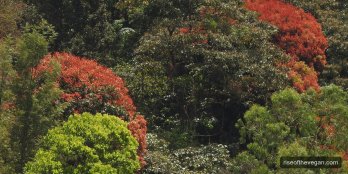
Photo: Divya Mudappa via Wikimedia Commons, CC BY-SA 4.0, cropped. This adapted image is also licensed CC BY-SA 4.0.
Diet Change Is the Biggest Lever to Stop Food Breaching Planetary Limits on Land and Wildlife
Dutch government modelers find dietary change brings the largest gains for land and biodiversity
Changing what we eat is the single biggest thing the food system can do to stop breaching the planet's limits on land use and wildlife, according to a global modeling study published in The Lancet Planetary Health on July 29.
Researchers at PBL Netherlands Environmental Assessment Agency used the IMAGE model to project future breaches of ten global and eight local planetary boundary indicators under business as usual and under a food-system transformation of dietary change, higher farm productivity and halving food loss and waste, with and without climate policy.
Dietary change brought the largest reductions in the land-system change (70%) and biosphere integrity (69%) domains. Productivity gains did most for phosphorus pollution and climate measures for freshwater and climate change, and at a global scale the food and climate strategies did not work against each other, the paper reports.
The authors conclude: "Policies addressing both the food system and climate change can be effective in simultaneously reducing boundary transgressions across scenarios, although a multiscale approach can help to identify regional trade-offs that remain hidden at global scales."
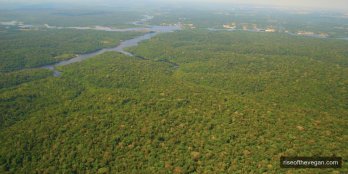
Less land for animal feed means more room for forests and wildlife.
It builds on the EAT-Lancet 2.0 report and on a study last month finding the new meat-heavy US dietary guidelines would raise food's environmental footprint by up to 32%.
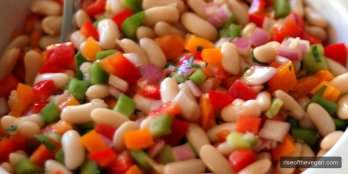
What's on our plates can help save the planet.
Subscribe!

Love this content?
Receive our awesome newsletter straight to your Inbox!
More articles you may enjoy













Love this content?
Receive our awesome newsletter straight to your Inbox!









Comments