
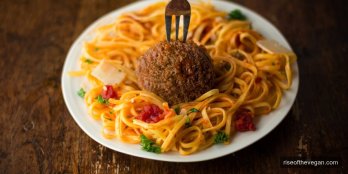
Photo: Mosa Meat via Wikimedia Commons, CC BY-SA 4.0, cropped. This adapted image is also licensed CC BY-SA 4.0.
Dutch Government Invests €60 Million in Cultivated Meat, the Largest Public Investment Ever
The money from the National Growth Fund will build a national ecosystem for cultivated meat and precision fermentation
The Dutch government has announced today (Thursday, April 14) that it will invest €60 million in cultivated meat and other cellular agriculture, the largest public investment in the field ever made by any government in the world.
The money comes from the Netherlands' National Growth Fund, which invests in sectors the government believes will drive the economy of the future. It was announced at a press conference by Minister of Economic Affairs and Climate Micky Adriaansens and growth fund committee chair Jeroen Dijsselbloem, and will support cultivated meat and precision fermentation: open-access research, education, publicly accessible scale-up facilities and work with farmers and consumers.
The proposal came from a new consortium of 12 organizations called Cellular Agriculture Netherlands, which includes startups Mosa Meat and Meatable alongside universities and NGOs. The €60 million is a first step toward a wider growth plan of €252 to €382 million. Ira van Eelen, speaking for the Dutch Cellular Agriculture Foundation, said:
We are very excited for the visionary leadership the government is demonstrating today. The Netherlands is the ideal place for cellular agriculture to flourish. It has a rich history in laying the global foundations of cellular agriculture. It is the 2nd biggest exporter of traditional agricultural products after the US. It is a global powerhouse in alternative protein and food innovation. It has a global frontrunner position in biotechnology. And it was the first country to publicly fund cultivated meat research and present a proof of concept to the world.
That last point matters. The world's first cultivated burger was a Dutch creation, and now the Dutch government is putting serious public money behind making it an everyday food.
The projected benefits are huge. The full plan is expected to add €10 to €14 billion a year to Dutch GDP by 2050, while avoiding around 12 million tonnes of CO2-equivalent emissions and 100,000 to 130,000 tonnes of ammonia every year. That's a big deal in a country with one of the most intensive livestock sectors in Europe. Acacia Smith, policy manager at the Good Food Institute Europe, put it plainly:
Governments interested in meeting their climate targets, protecting public health and increasing food security must follow the Netherlands' lead and invest in the research and infrastructure needed to make these sustainable food options affordable and accessible across Europe.
The UN Food and Agriculture Organization estimates that livestock produce around 14.5% of all human-caused greenhouse gas emissions. Meat grown from cells, without the slaughterhouse, the feedlots or the slurry, takes a big bite out of that.
The Netherlands now joins Singapore, which became the first country to approve lab-grown chicken for sale, at the front of this race. Even the meat giants can see it coming: JBS, the world's largest meat company, bought Dutch plant-based brand Vivera, and years ago Tyson Foods' CEO said the future of food might be meatless. Next door, Germans are eating less meat than at any time since records began.
The future of meat is being grown in the Netherlands.
Subscribe!
Love this content?
Receive our awesome newsletter straight to your Inbox!
More articles you may enjoy








Love this content?
Receive our awesome newsletter straight to your Inbox!



Comments