
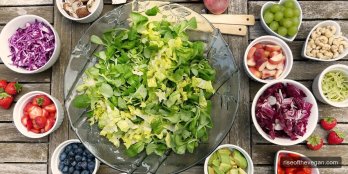
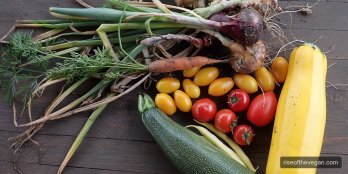
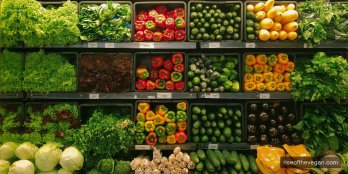
Photo: silviarita on Pixabay.
Weight Gain Linked to Minimally Processed Animal Foods, Not Ultra-Processed Plant Foods, Analysis Finds
A new analysis finds eating more minimally processed animal foods was linked to weight gain, while ultra-processed plant foods showed no link
Where food comes from matters for weight, not just how processed it is. In a new analysis by the Physicians Committee for Responsible Medicine (PCRM), eating more minimally processed animal foods (meat, fish, eggs and dairy) was linked to weight gain, while ultra-processed plant foods showed no link to weight change at all.
The analysis, published online in Nutrition Research on October 1, followed 62 adults with overweight who spent 16 weeks on a low-fat vegan diet and 16 weeks on a Mediterranean diet rich in olive oil, fish and nuts, in random order, with a four-week break in between. Their three-day food records were then sorted two ways: by how processed each food was, using the NOVA system, and by whether it came from a plant or an animal.
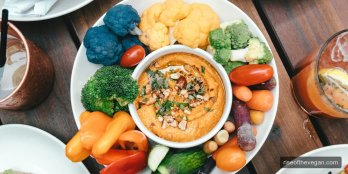
Compared with the Mediterranean diet, the vegan diet cut minimally processed animal foods by 135 grams (about 4.8 ounces) a day more and raised minimally processed plant foods, such as fruits, vegetables, whole grains and beans, by 202 grams (about 7 ounces) a day more. Processed animal and plant foods fell more on the vegan diet too.
Then the team looked at which changes tracked the scale. The strongest link was with minimally processed animal foods: in the second 16-week period, people who ate more of them gained more weight (r = +0.42), the only link in the analysis to hold up after a strict correction for multiple comparisons. In the first period, processed and ultra-processed animal foods also tracked weight gain (r = +0.30 and +0.36), and in the second, minimally processed plant foods tracked weight loss (r = -0.35), though these links were weaker. Ultra-processed plant foods were not linked to weight change. It is an exploratory analysis within one trial, so it shows links rather than proof of cause.
Lead author Dr. Hana Kahleova, PCRM's director of clinical research, explains in PCRM's announcement:
“Ultra-processed foods get most of the blame for weight gain, but our results suggest we also need to ask whether a food comes from a plant or an animal. A chicken breast is minimally processed. So is an apple. In our study, they did not move the scale in the same direction.”
The weight results show how big that difference can be. Over the trial, people lost an average of 6 kilograms (about 13 pounds) on the vegan diet and nothing on the Mediterranean diet. PCRM points out that minimally processed plant foods are high in fiber and water and low in calorie density, which helps people feel full on fewer calories.
For anyone who worries that ultra-processed vegan foods cancel out the benefits of eating plant-based, this is reassuring: they were not linked to weight change, while animal foods were, even minimally processed ones. The plate that worked best was still built on whole plant foods, as Dr. Kahleova says:
“If you want to lose weight, fill your plate with beans, vegetables, fruits, and whole grains, and leave the animal products off. The degree of processing still matters, but it is not the whole story.”
The American College of Cardiology has backed diets centered on minimally processed plant foods, and an Emory heart researcher found plant-based diets beat low-carb, meat-heavy diets for heart health and diabetes.
The evidence keeps pointing the same way: build your meals on plants.
Subscribe!
Love this content?
Receive our awesome newsletter straight to your Inbox!
More in Health & Nutrition


Love this content?
Receive our awesome newsletter straight to your Inbox!





Comments