
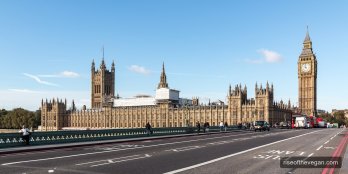
Photo: Dietmar Rabich via Wikimedia Commons, CC BY-SA 4.0, cropped. This adapted image is also licensed CC BY-SA 4.0.
UK Parliament Could Save £216,000 a Year by Switching to Plant Proteins, Report Finds
Swapping 30% of the meat and fish Westminster buys for beans, lentils, tofu and nuts would also cut about 650 tonnes of emissions a year
The UK Parliament could save an estimated £216,000 a year on ingredients by replacing 30% of the meat, fish and shellfish it buys with beans, lentils, tofu and nuts, according to a new economic analysis commissioned by Humane World for Animals UK (formerly Humane Society International UK).
The report, Could increasing plant-based catering in the Houses of Parliament save money?, by economists Griffin Carpenter and Artūrs Kaņepājs, was launched at an event in the House of Commons on Wednesday, October 21. It is built on Parliament's own purchase and sales records for 2024-25, released under Freedom of Information.
More than 92% of the protein-rich food Parliament bought came from animal sources, with less than 8% from whole plant proteins such as beans, tofu and tempeh. Over the year the House of Commons bought about 20 tonnes (22 US tons) of raw chicken but just 954kg (2,103lb) of tofu.
The savings are a modeled estimate. They use list prices collected between July and October 2026 rather than the prices Parliament actually pays, and they leave out labor, energy and waste. A 30% switch would save about £78,000 a year in the House of Lords and £138,000 in the House of Commons. The trick is cooking around simple staples: the full report finds that every £1 of meat and seafood replaced with basic plant proteins saves about 57p, while swapping in manufactured meat substitutes would add cost.
Claire Bass, senior director of campaigns and public affairs at Humane World for Animals UK, said the report shows Parliament can "lead by example":
Replacing 30% of the animal proteins Parliament buys with beans, lentils, tofu and nuts could save more than £200,000 a year. We know that there's already appetite among many MPs to have more plants on plates; this is a clear opportunity for the Government to drive that shift across central government catering and save money, cut greenhouse gases and spare animals from suffering.
Navendu Mishra, the MP for Stockport who sponsored the launch, said Parliament's chefs "produce some excellent plant-based options, we simply need more of them because plant-based dishes can and should be enjoyed by all." He added that a relatively small shift "could save money, and help stimulate market demand for British-grown beans and pulses." He's not alone: in a 2025 YouGov survey of 105 MPs, 38% said they would like a higher proportion of nutritious plant-based options in parliamentary catering.
It's good news for the planet, too. A 30% switch would cut the emissions linked to Parliament's animal protein purchases by about a quarter, around 650 tonnes (717 US tons) of CO2e a year, and would put Westminster in line with the Climate Change Committee's recommended 25% cut in meat consumption by 2040. Across the 27 House of Lords dishes the authors compared, the plant-based versions came in 80 to 83% lower in emissions per serving.
Westminster would be in good company. The report points to New York City's public hospitals, which made plant-based meals the default and report lower food costs, and closer to home 35 UK hospitals cut their food emissions 22% the same way. Haarlem became the first city to ban meat adverts and COP31 set a 60% meat-free menu target. Meanwhile an Oxford study found that peas, beans and soy beat meat and dairy on health, environment and cost, and UK shoppers are already swapping meat for beans.
Beans in the Commons? We'd vote for that.
Subscribe!

Love this content?
Receive our awesome newsletter straight to your Inbox!
More articles you may enjoy






Love this content?
Receive our awesome newsletter straight to your Inbox!








Comments