
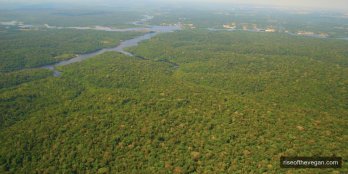
Photo: James Martins via Wikimedia Commons, CC BY 3.0, cropped.
Replacing Just 20% of Beef With Fungi-Based Protein Could Halve Deforestation
Potsdam researchers model microbial protein as a substitute for ruminant meat to 2050
Replacing just a fifth of the world's beef and other ruminant meat with protein grown from microbes such as fungi could halve deforestation by 2050, according to a new study. Annual CO2 emissions from clearing land could also fall by half, and methane would drop.
Dr. Florian Humpenöder and colleagues at the Potsdam Institute for Climate Impact Research used a global land-use model to project the effects of substituting 20% of per-person ruminant meat with microbial protein, a protein-rich, meat-like food brewed in fermentation tanks, like the mycoprotein already on supermarket shelves. The study is published in Nature.
The substitution offsets future growth in pasture, the main driver of forest clearing for cattle. Going further gives smaller extra gains, and the bioreactors need clean electricity to deliver their full climate benefit.
We found that if we substituted 20 per cent of ruminant meat per capita by 2050, annual deforestation and CO2 emissions from land-use change would be halved compared to a business-as-usual scenario.
That is Humpenöder in the institute's release. "They can continue eating burgers and the like, it's just that those burger patties will be produced in a different way," he added.
It comes a month after the UN climate panel named diet change as a climate solution, and follows the Dutch government's record investment in cultivated meat.
Fewer cows, more trees, and burgers all round.
Subscribe!

Love this content?
Receive our awesome newsletter straight to your Inbox!
More articles you may enjoy













Love this content?
Receive our awesome newsletter straight to your Inbox!












Comments