
EAT-Lancet 2.0: Scientists Say a Plant-Rich Diet Could Prevent 15 Million Deaths a Year
The new Lancet commission finds food is the main driver behind breaching five planetary boundaries
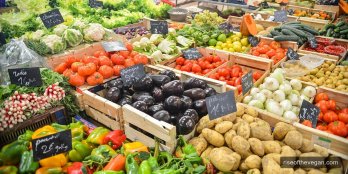
A huge new scientific report published in The Lancet last week has found that shifting the world to a mostly plant-based diet could prevent up to 15 million premature deaths every year, around 40,000 lives a day.
The 2025 EAT-Lancet Commission on healthy, sustainable and just food systems brings together experts in nutrition, climate, economics, health and agriculture from more than 35 countries. It is a follow-up to the landmark 2019 report that first set out the Planetary Health Diet: plenty of fruit, vegetables, nuts, legumes and whole grains, with only small amounts of meat and dairy.
The headline numbers are even stronger than last time. The commission raised its estimate of lives saved each year from 11.6 million to 15 million, according to Harvard T.H. Chan School of Public Health. It also links the diet to a 28% lower risk of premature death, and to less cancer and neurodegenerative disease. On top of that, the shift would cut food-related greenhouse gas emissions by more than half.
The report finds that food production is the main driver behind humanity breaching five of the planetary boundaries, and is responsible for around 30% of global greenhouse gas emissions. Even if fossil fuels were phased out completely, food alone could push warming past 1.5°C.
Lead author Johan Rockström, co-chair of the commission and director of the Potsdam Institute for Climate Impact Research, said:
The report sets out the clearest guidance yet for feeding a growing population without breaching the safe operating space on Earth set by the planetary boundaries. It shows that what we put on our plates can save millions of lives, cut billions of tonnes of emissions, halt the loss of biodiversity, and create a fairer food system. The evidence is undeniable: transforming food systems is not only possible, it's essential to securing a safe, just, and sustainable future for all.
Co-chair Professor Walter Willett of Harvard suggests keeping dairy to once a day, red meat to once a week, and eggs, poultry and fish to about twice a week. We'd go a bit further, of course, but the direction of travel couldn't be clearer.
This is the strongest case yet for what we've been saying for years. The first EAT-Lancet report in 2019 told the world to halve red meat. In 2023 an Oxford study found vegan diets cut climate impact by 75%, and COP28 served world leaders a two-thirds plant-based menu. This year Switzerland put plant-based eating at the heart of its nutrition strategy and Lidl GB's plant-based sales rose 694%.
Fifteen million lives a year. The future is on our plates.
Subscribe!

Love this content?
Receive our awesome newsletter straight to your Inbox!
More articles you may enjoy







Love this content?
Receive our awesome newsletter straight to your Inbox!








Comments