
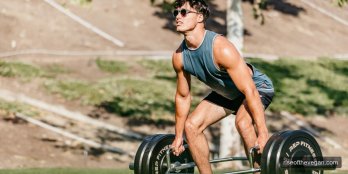
Photo: joe mcferrin on Unsplash.
Men Who Eat More Plant Protein Have Higher Testosterone, Finnish Study Finds
In a study of 2,546 Finnish men, those who ate the most plant protein had higher testosterone, and those who ate the most animal protein had lower
Here's one for everyone who has been warned that giving up meat and dairy will cost them testosterone. A new study from the University of Eastern Finland finds that men who ate the most plant protein had higher total testosterone than men who ate the least, while men who ate the most animal protein had lower levels.
The paper, published in the International Journal of Food Sciences and Nutrition, looked at 2,546 men aged 42 to 60 in eastern Finland, all taking part in the long-running Kuopio Ischaemic Heart Disease Risk Factor Study. Each man recorded everything he ate for four days, and blood samples were tested for total testosterone and sex hormone-binding globulin (SHBG, a protein that binds testosterone in the blood and shapes how much is measured).
The researchers split the men into four equal groups by intake. Men in the top plant protein group had total testosterone 1.1 nmol/L (about 32 ng/dL) higher than men in the bottom group, and SHBG 3.0 nmol/L higher. Animal protein went the other way: the top group had total testosterone 1.2 nmol/L (about 35 ng/dL) lower and SHBG 3.0 nmol/L lower. The analysis accounted for age, body mass index and several other diet, lifestyle and health factors.
Breaking it down by food, protein from dairy was linked to lower total testosterone and SHBG, while plant protein from vegetables and other non-cereal sources was linked to higher total testosterone. Meat protein was linked to lower SHBG but not to total testosterone. Calculated free testosterone (the unbound share) was also higher in men who ate more non-grain plant protein, and lower the more their protein leaned toward animal sources.
Lead author Miika Wynne-Ellis, a doctoral researcher at the university, is careful about what the numbers mean:
Although the observed differences in testosterone concentrations were statistically significant, they were relatively small. The study cannot establish whether these differences have implications for health.
The study is cross-sectional, a snapshot rather than a trial, so it shows a link rather than cause and effect, and the diet records date from 1984 to 1989. The team also notes that other parts of the diet or metabolic factors could play a role.
What it does put to rest is the gym-floor worry that eating plants saps a man's hormones. In this large group of men, more plant protein went hand in hand with more testosterone, not less. That fits with trials showing plant protein builds muscle and strength as well as animal protein and that going plant-based does not hurt runners' or lifters' performance.
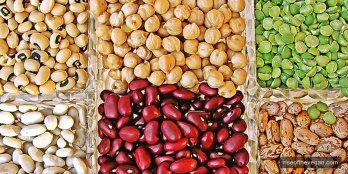
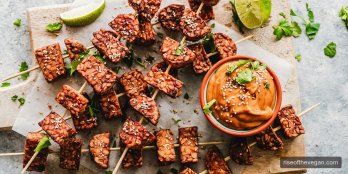
If you train, protein-rich plant foods are easy to stack up through the day: lentils, chickpeas and black beans, tofu, tempeh and edamame, green peas, and nuts and seeds such as peanuts, pumpkin seeds and hemp hearts. A big lentil chili after a session or a tofu scramble at breakfast does the job nicely.
It's the latest in a run of good news for plant protein. Earlier this week a vegan diet trial linked swapping animal protein for plant protein to weight loss, and Harvard researchers have linked more plant protein to a 19% lower heart disease risk. On the platform, vegan strongman James Hamilton just set a log world record with 117.5kg and Ryan Stills won his sixth powerlifting world title.
The case for building strength on plants keeps getting stronger.
Subscribe!
Love this content?
Receive our awesome newsletter straight to your Inbox!
More in Health & Nutrition

Love this content?
Receive our awesome newsletter straight to your Inbox!








Comments