
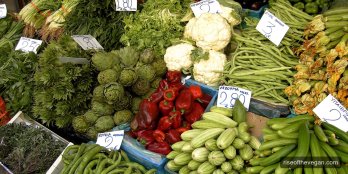
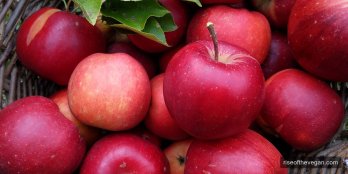
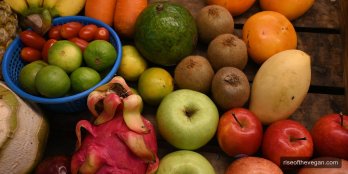
Photo: Hans Hillewaert via Wikimedia Commons, CC BY-SA 3.0, cropped. This adapted image is also licensed CC BY-SA 3.0.
37 Scientists Agree: EAT-Lancet "Planetary Health Diet" Says the World Must Halve Red Meat
Global adoption of the mostly plant-based diet could prevent around 11 million premature deaths a year
Thirty-seven leading scientists from 16 countries have agreed on a single diet they say can feed 10 billion people by 2050 without wrecking the planet. It's mostly plants.
The "planetary health diet" is the centrepiece of Food in the Anthropocene: the EAT-Lancet Commission on healthy diets from sustainable food systems, published in The Lancet this week. The commission brought together experts in health, nutrition, environmental sustainability, food systems, economics and governance, and was co-led by Professor Walter Willett of Harvard University and Professor Johan Rockström, with the Stockholm Resilience Centre coordinating the science.
The headline numbers are big. Compared with current diets, global consumption of red meat and sugar needs to fall by more than 50%, while consumption of nuts, fruits, vegetables and legumes needs to more than double.
The recommended daily pattern includes around 500g of vegetables and fruit, with protein coming mainly from plants. Red meat is allowed at about 14g a day, which is barely a mouthful. Countries in North America currently eat almost 6.5 times the recommended amount.
The health payoff is enormous. Three separate models found that adopting the diet globally could avert between 10.9 and 11.6 million premature deaths every year, cutting adult deaths by 19% to 23.6%.
Co-lead commissioner Dr. Walter Willett explains:
The world's diets must change dramatically. More than 800 million people have insufficient food, while many more consume an unhealthy diet that contributes to premature death and disease. To be healthy, diets must have an appropriate calorie intake and consist of a variety of plant-based foods, low amounts of animal-based foods, unsaturated rather than saturated fats, and few refined grains, highly processed foods, and added sugars. The food group intake ranges that we suggest allow flexibility to accommodate various food types, agricultural systems, cultural traditions, and individual dietary preferences, including numerous omnivore, vegetarian, and vegan diets.
Commission co-author Professor Tim Lang of City, University of London put it even more bluntly: "The food we eat and how we produce it determines the health of people and the planet, and we are currently getting this seriously wrong."
The planetary health diet isn't vegan, but it points firmly in our direction, and Willett confirms that vegan diets fit within it. As Eco-Business reports, the commission says the change will "send clear market signals all the way through the food value chain back to the farmers".
None of this will surprise regular readers. Oxford University research in PNAS found that a global vegan diet would save more than 8 million lives by 2050 and cut emissions by 66%, and the largest study of its kind linked meat consumption to nine major diseases.
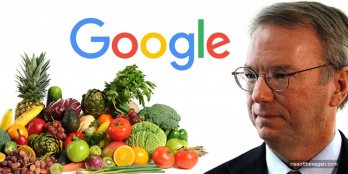
Earlier this month The Economist declared 2019 "the year of the vegan". Before that, 24 EU members demanded Europe shift to a plant-based diet, and the UN advised countries to tax the meat industry. It all fits the plant-based revolution Google predicted.
The science is in. Pass the lentils.
Subscribe!

Love this content?
Receive our awesome newsletter straight to your Inbox!
More articles you may enjoy









Love this content?
Receive our awesome newsletter straight to your Inbox!











Comments