
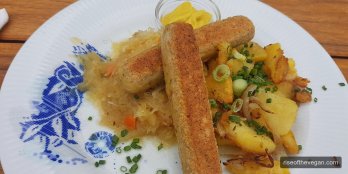
Photo: Benreis via Wikimedia Commons, CC BY-SA 4.0, cropped. This adapted image is also licensed CC BY-SA 4.0.
German Sausage Maker Sells More Veggie Than Sausage for the First Time
Rügenwalder Mühle, making sausages since 1834, took more money from meat-free products than from its classic sausages in July
One of Germany's best-known sausage makers has, for the first time in its 186-year history, made more money from vegetarian and vegan products than from its classic sausages.
Rügenwalder Mühle, based in Bad Zwischenahn in Lower Saxony, took more revenue in July from its meat-free range than from its traditional Teewurst and cold cuts, Handelsblatt reports. The firm was founded in 1834 by Carl Müller as a butcher's shop in the Pomeranian town of Rügenwalde. The family firm is Germany's seventh-largest sausage maker, in the land of bratwurst no less.
Sales of its meat-free products grew 50% in the first half of 2020, vegconomist reports, with monthly growth peaking at up to 100%. The company spent €5.5 million in the first half of the year expanding capacity, took on 11% more staff and now offers more meat-free products than meat ones. It holds around 40% of the German market for meat alternatives.
This is a conversion story. Rügenwalder only launched its first vegetarian line in 2014. In under six years it has gone from a traditional butcher's brand to the country's leading maker of meat alternatives. Michael Hähnel, who chairs the company's management board, put it this way in the half-year results (our translation from German):
We aim for further long-term growth. The rule is: our classic products form our standing leg. Veggie is our attacking leg.
The football metaphor says it all. Meat keeps the company steady, but veggie is where the growth is coming from. Hähnel told Handelsblatt the firm's image as a reliable regional German producer sets it apart from the international competition: "No other manufacturer of plant-based meat has this credibility."
The health case for leaving processed meat behind could hardly be clearer. In 2015 the World Health Organization classified processed meat as a Group 1 carcinogen, the same category as tobacco smoke, and a University of Oxford study found that a global shift to plant-based eating would save more than 8 million lives by 2050.
Germany keeps surprising us. In 2017 the German Environment Ministry banned meat at official functions. Rügenwalder now joins Quorn and the 90-year-old New York dairy that switched to plant milks on the list of traditional food companies following the money. Even the CEO of Tyson Foods saw the need to move beyond meat, and this summer Oprah and Jay-Z invested in Oatly.
When a 186-year-old sausage maker bets on plants, you know the tide has turned.
Subscribe!
Love this content?
Receive our awesome newsletter straight to your Inbox!
More articles you may enjoy



Love this content?
Receive our awesome newsletter straight to your Inbox!



Comments