
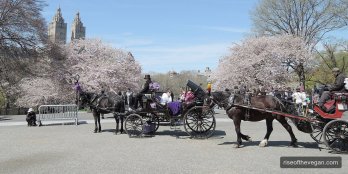
Photo: Jim.henderson via Wikimedia Commons, public domain.
New York City Signs Law Ending Horse-Drawn Carriage Rides by 2028
Mayor Zohran Mamdani signed Romanch's Law on November 19, and the horses are protected from slaughter or resale to other carriage businesses
New York City's carriage horses are heading into retirement. Mayor Zohran Mamdani signed Romanch's Law at City Hall on Thursday, November 19, ending a horse-drawn carriage trade that has worked Central Park since 1858. Every carriage has to stop by June 1, 2028.
Great news for the horses! The City Council passed the bill 40 to 7 on October 22, with two members abstaining. It was sponsored by Council Member Christopher Marte and backed by Speaker Julie Menin, the first sitting Council Speaker to support a ban. The first bill to end the trade was introduced in 2007, so this one has been 19 years in the making.
The law is named for Romanch Mahajan, an 18-year-old visitor who died in June after the horse pulling his family's carriage bolted in Central Park. His family joined lawmakers at hearings and rallies for the bill, and the mayor said at the signing:
Our city has changed, and now it is time for our laws to change, too. That is why today I am signing Romanch's Law, legislation that will phase horse carriages out of New York City once and for all by June 1, 2028.
So what happens to the horses? No new carriage licenses will be issued, and by June 1, 2027, every owner has to certify to the city's Department of Health and Mental Hygiene that no horse will be sold or transferred for slaughter, for use in another carriage business or for any inhumane purpose. Owners can also keep their horses. Allie Taylor, director of the Mayor's Office of Animal Welfare, who began her activism campaigning against the carriages, told the room:
For the animal rights movement, this moment has meaning far beyond the horse carriage industry. It affirms that animals are individuals whose lives have value beyond what they can do for us, and that our city has a responsibility to protect them. [...] We have loving, permanent homes available for all of the horses. Sanctuaries and rescue organizations have stepped forward with offers to welcome them and to provide the care they deserve for the rest of their lives at no cost to their owners.
The more than 200 New Yorkers who work in the industry are part of the plan too. The law requires a workforce transition program, and the mayor has promised a full transition plan in April 2027 with medallion buybacks for owners and a stipend for drivers and stable hands to attend workforce training and career classes. As Marte put it, "protecting horses has never been at odds with protecting workers."
The law is signed but not yet in effect, and carriages can keep running until the 2028 deadline. The Transport Workers Union, which represents the drivers, also filed a class-action lawsuit in Manhattan federal court asking for the ban to be declared unconstitutional.
What makes this one special is that it's an ending, not a tweak. New York isn't settling for shorter shifts or new heat rules: the largest city in the US is closing the trade for good and giving the horses a future "with room to graze, run and simply be horses," in Taylor's words.
It's part of a wave of animal protection laws this month. Bulgaria's parliament voted unanimously to ban fur farming, Denmark ended mink farming for good, and Buenos Aires passed a Compassion Law that makes animal protection lessons compulsory in schools. Closer to home, D.C. and Denver voters banned foie gras.
Central Park's horses are going home to the pasture, and that's a sight worth waiting for.
Subscribe!

Love this content?
Receive our awesome newsletter straight to your Inbox!
More in Animals & Law






Love this content?
Receive our awesome newsletter straight to your Inbox!













Comments